Making it easier to start something new
Making it easier to start something new
Role
Product Designer
Role
Product Designer
Year
2024
Year
2024
Category
Mobile
Category
Mobile
Overview
Overview
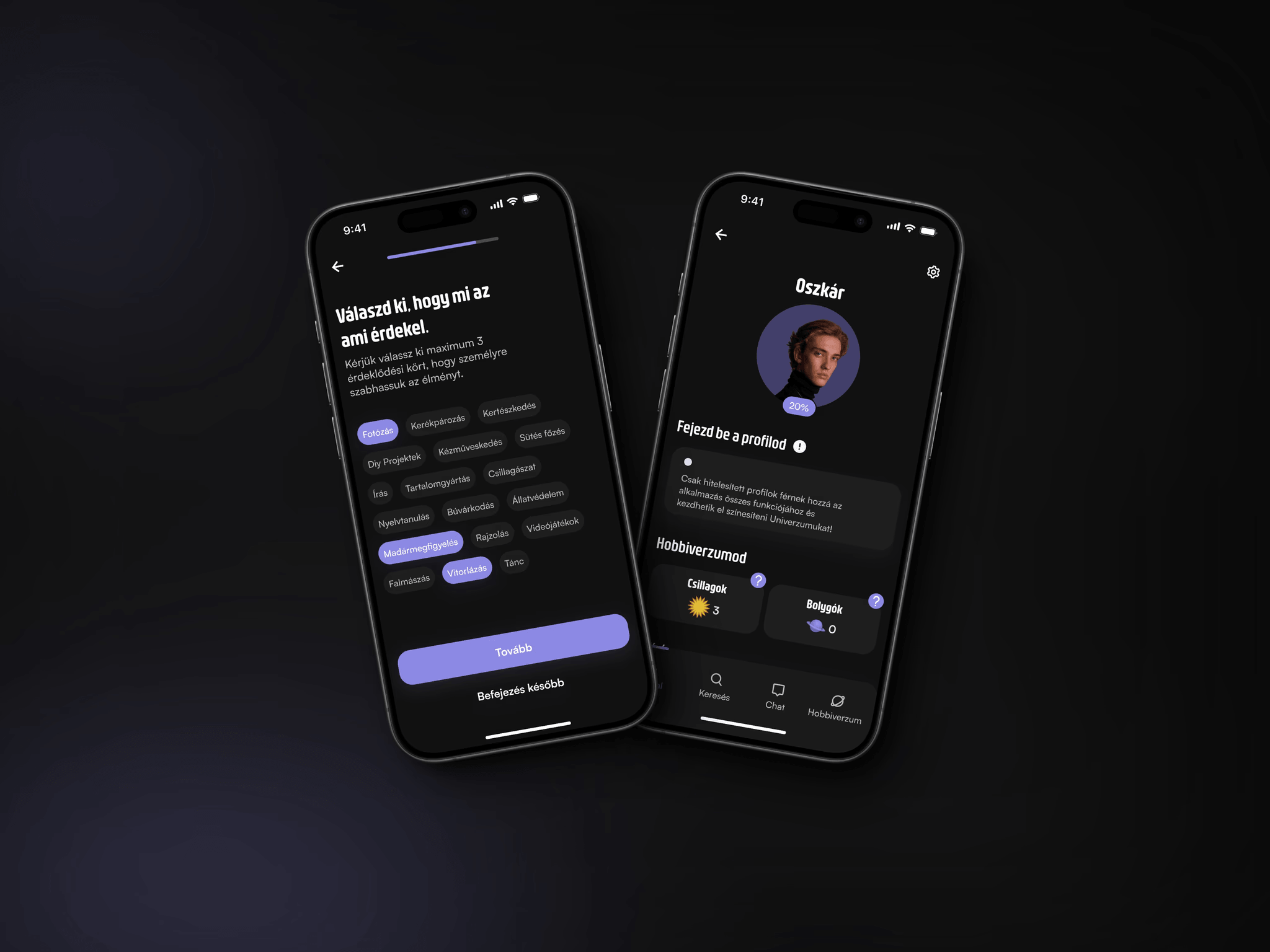
Hobbyverse is a platform designed to help people explore new hobbies by connecting them with experienced practitioners. The goal was not just discovery, but reducing the friction and uncertainty of getting started.
Hobbyverse is a platform designed to help people explore new hobbies by connecting them with experienced practitioners. The goal was not just discovery, but reducing the friction and uncertainty of getting started.
Problem Framing
Exploring a new hobby is rarely straightforward. Through early exploration, I identified three core user questions:
-Where do I even start?
-Who can I trust for guidance?
-What will this cost me (time, money, effort)?
These questions revealed a broader challenge:
Users don’t lack access to information — they lack trusted, structured guidance.
Exploring a new hobby is rarely straightforward. Through early exploration, I identified three core user questions:
-Where do I even start?
-Who can I trust for guidance?
-What will this cost me (time, money, effort)?
These questions revealed a broader challenge:
Users don’t lack access to information — they lack trusted, structured guidance.
Research and key insights
Desk Research
I analyzed existing platforms (forums, YouTube, hobby groups) and identified recurring issues:
Overabundance of unsolicited and low-quality advice
Presence of condescending or discouraging interactions
Difficulty verifying credibility of sources
Research and key insights
Desk Research
I analyzed existing platforms (forums, YouTube, hobby groups) and identified recurring issues:
Overabundance of unsolicited and low-quality advice
Presence of condescending or discouraging interactions
Difficulty verifying credibility of sources
Research and key insights
Desk Research
I analyzed existing platforms (forums, YouTube, hobby groups) and identified recurring issues:
Overabundance of unsolicited and low-quality advice
Presence of condescending or discouraging interactions
Difficulty verifying credibility of sources
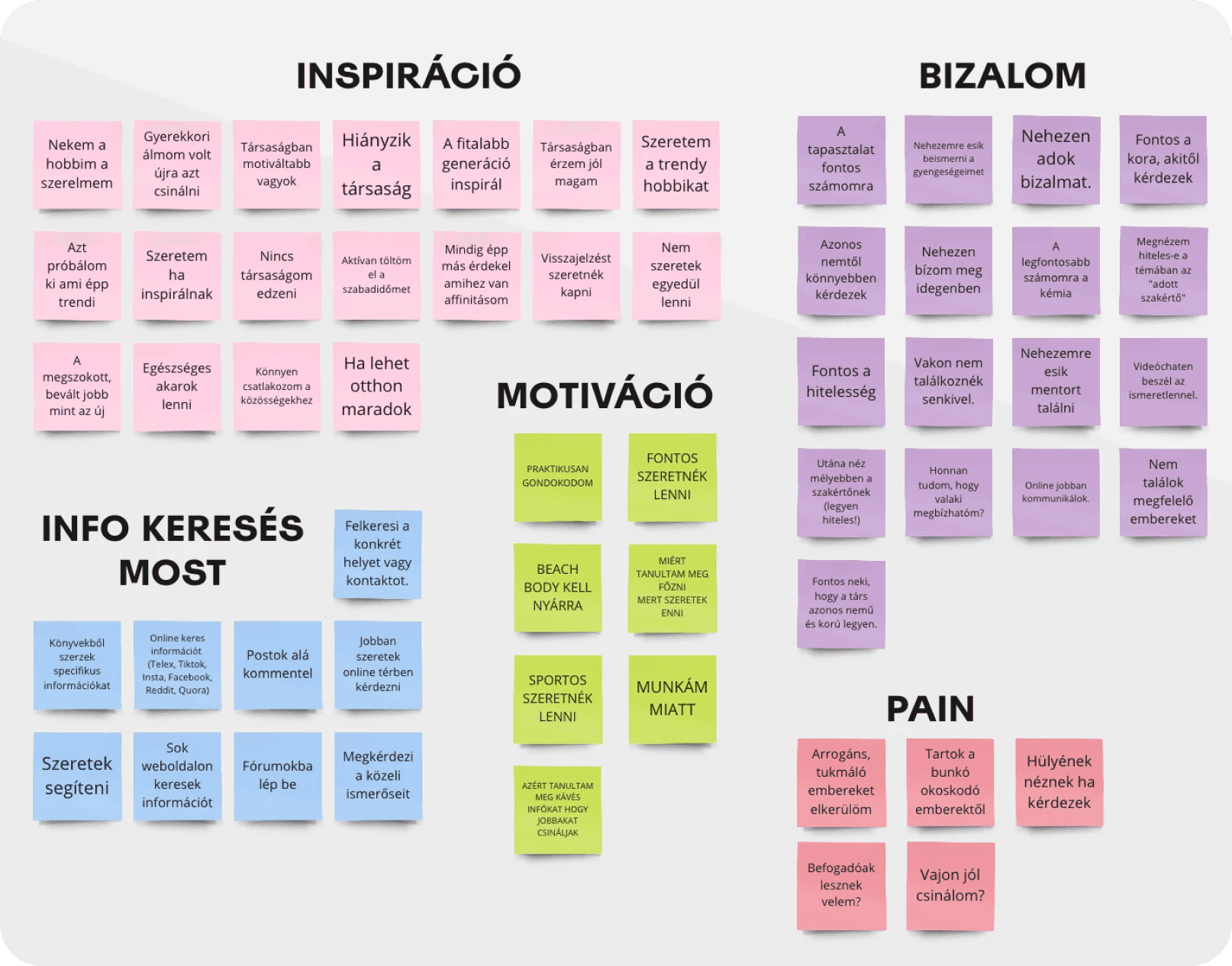
Qualitative Research
I conducted interviews to validate assumptions and uncover behavioral patterns.
These are the findings:
I conducted interviews to validate assumptions and uncover behavioral patterns.
These are the findings:
70% of participants were willing to mentor others
80% expressed low trust in online profiles, citing fake identities
Users valued human guidance, but only when it felt safe and credible
70% of participants were willing to mentor others
80% expressed low trust in online profiles, citing fake identities
Users valued human guidance, but only when it felt safe and credible
Trust is not a feature.. it’s a prerequisite for participation.
This insight became a primary product driver, not just a UX consideration.
Research insights
Design Principle
Enable safe exploration through trusted human connections.
1
Trust & Safety as a foundation
2
Lowering the activation energy for trying a hobby
Design Principle
Enable safe exploration through trusted human connections.
1
Trust & Safety as a foundation
2
Lowering the activation energy for trying a hobby
Design Principle
Enable safe exploration through trusted human connections.
1
Trust & Safety as a foundation
2
Lowering the activation energy for trying a hobby
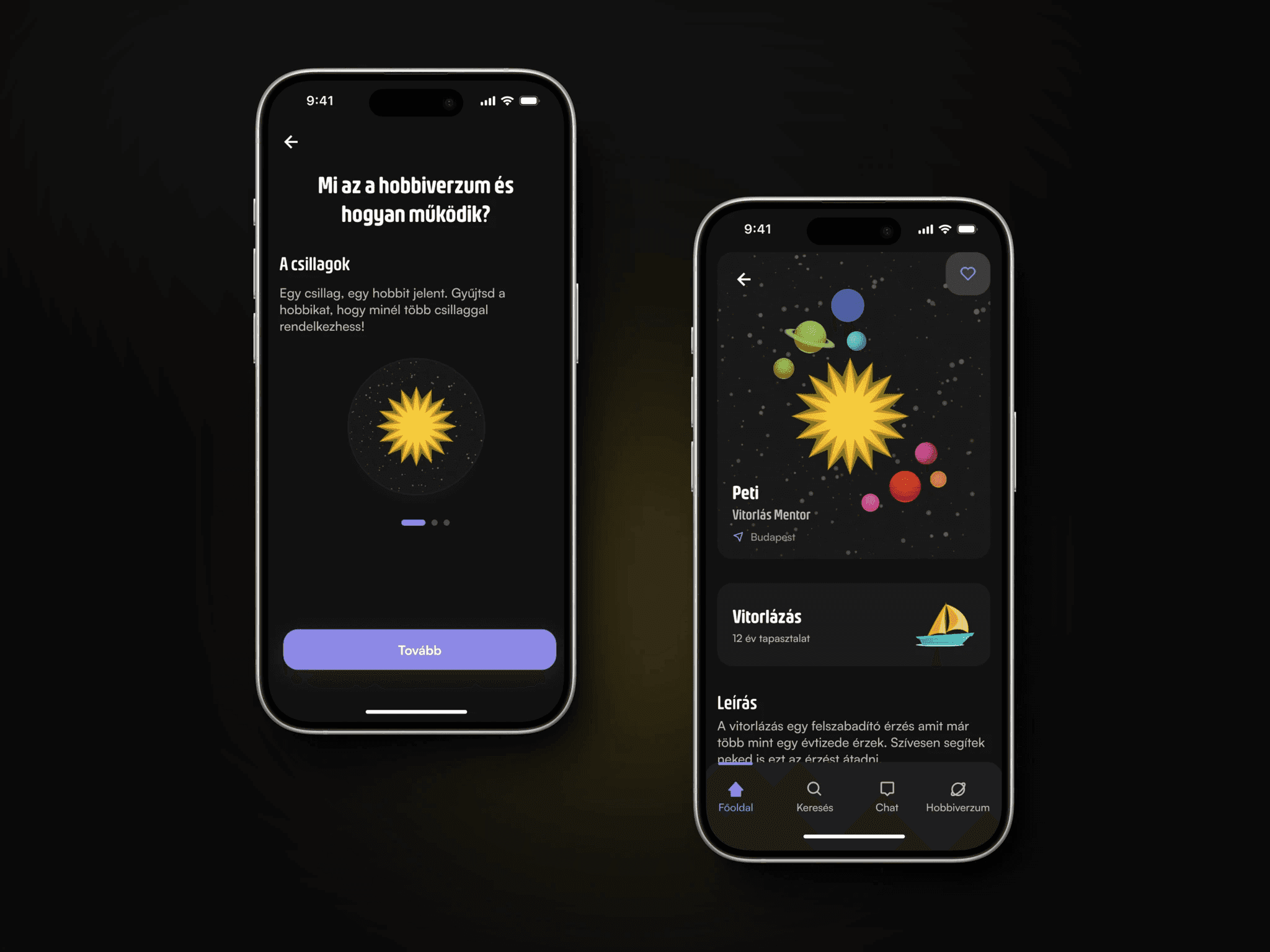
The “Hobbyverse” as a name
Why hobbyverse?
The “Hobbyverse” metaphor was inspired by the idea that:
-Hobbies are vast and diverse, like stars in a universe.
-Users should feel encouraged to explore playfully, without pressure.
The “Hobbyverse” as a name
Why hobbyverse?
The “Hobbyverse” metaphor was inspired by the idea that:
-Hobbies are vast and diverse, like stars in a universe.
-Users should feel encouraged to explore playfully, without pressure.
The “Hobbyverse” as a name
Why hobbyverse?
The “Hobbyverse” metaphor was inspired by the idea that:
-Hobbies are vast and diverse, like stars in a universe.
-Users should feel encouraged to explore playfully, without pressure.
Key Experience Decisions
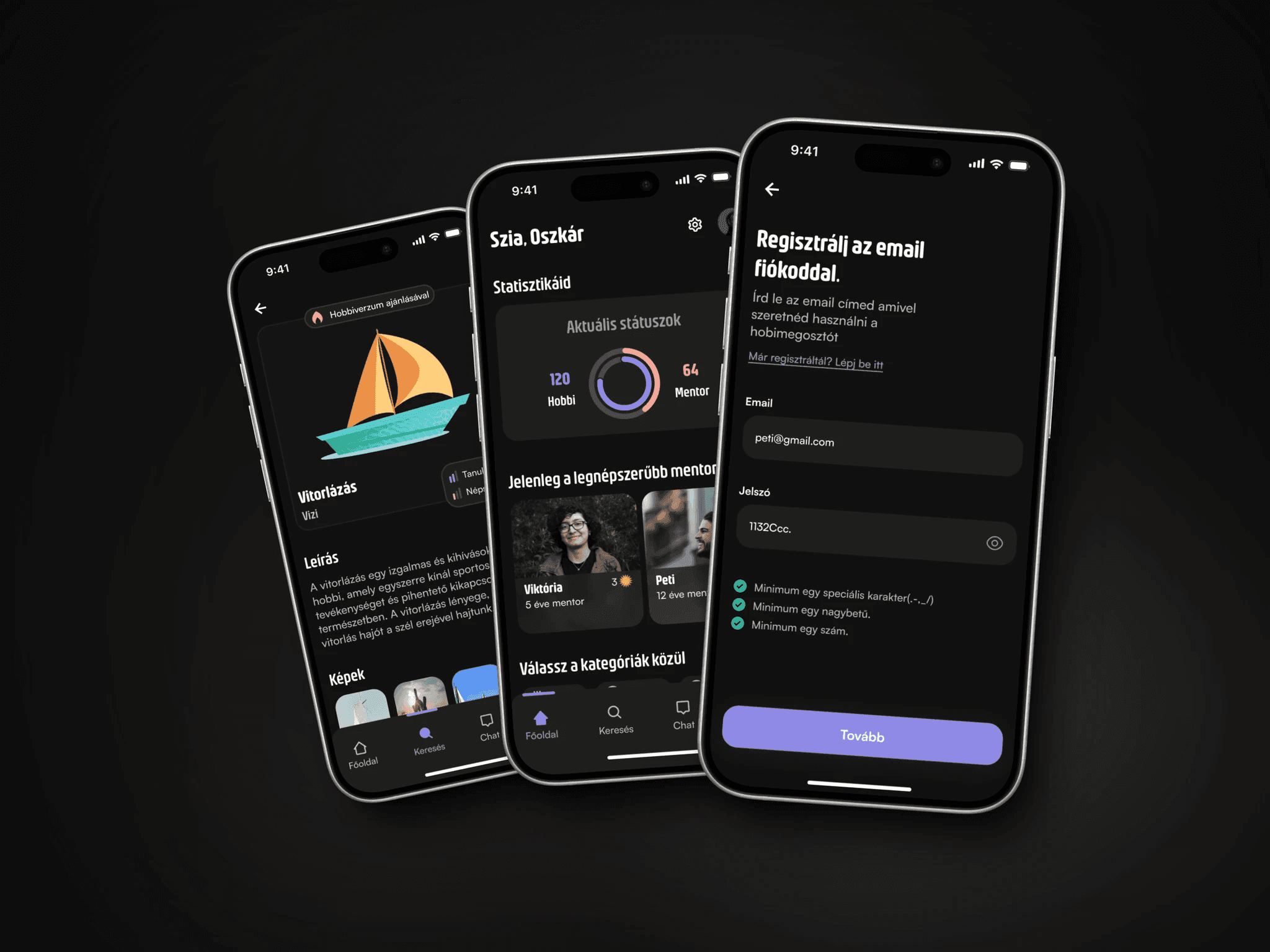
1. Trust-Driven Onboarding
To address trust concerns:
Introduced optional two-step verification
Restricted certain features for unverified users
Why this matters?
Balances user control with platform integrity and avoids friction for casual users while protecting core interactions.
Key Experience Decisions
1. Trust-Driven Onboarding
To address trust concerns:
Introduced optional two-step verification
Restricted certain features for unverified users
Why this matters?
Balances user control with platform integrity and avoids friction for casual users while protecting core interactions.
Key Experience Decisions
1. Trust-Driven Onboarding
To address trust concerns:
Introduced optional two-step verification
Restricted certain features for unverified users
Why this matters?
Balances user control with platform integrity and avoids friction for casual users while protecting core interactions.
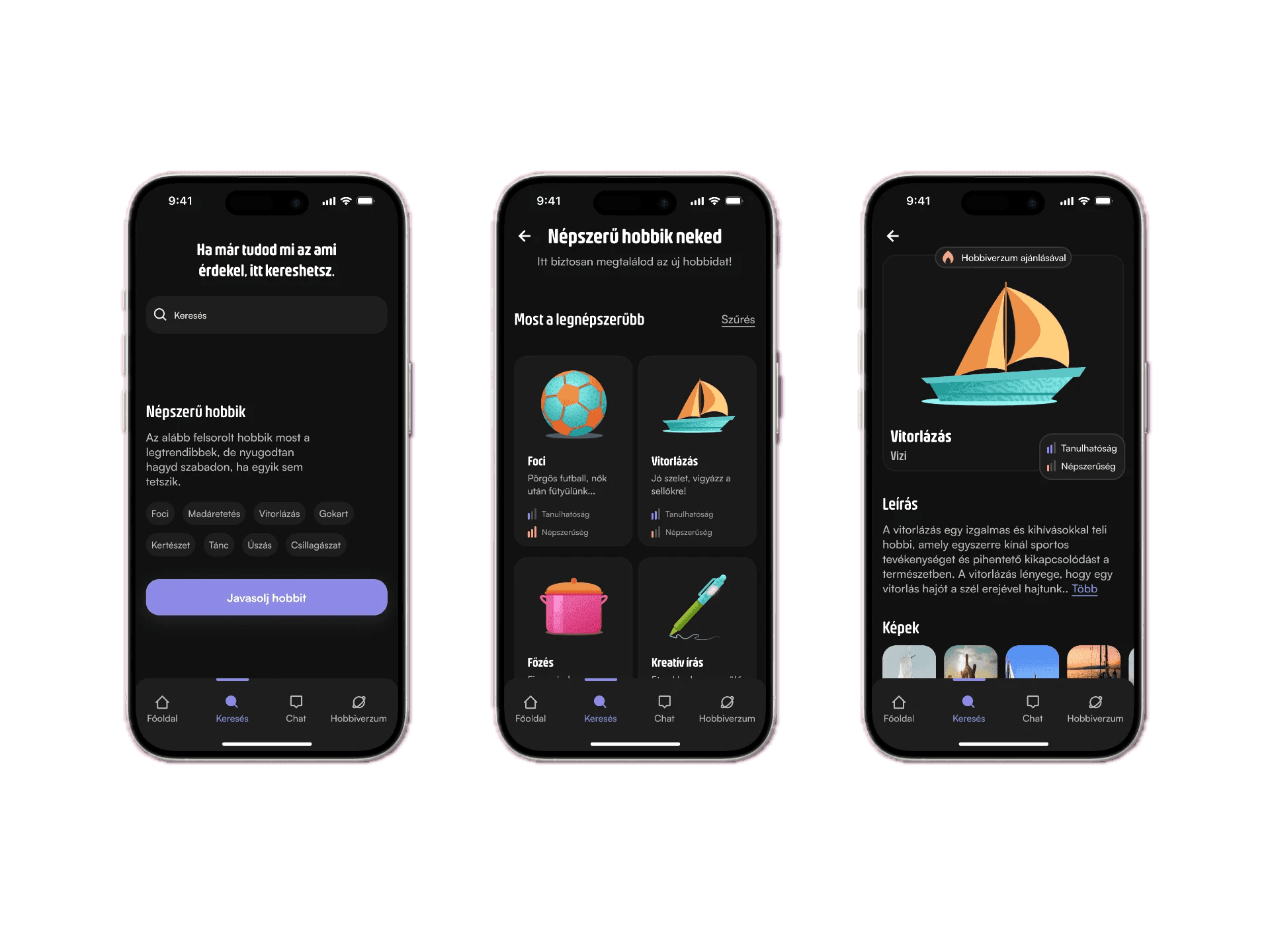
2. Flexible Discovery Model
I designed for two distinct user mindsets:
Explorers (don’t know what they want)
Browse trending hobbies, See difficulty, popularity, and reviews Learn through community insights.
Intent-driven users (know what they want)
Directly search for hobbies, connect with mentors, start structured learning.
Insight applied:
Discovery is not one flow, it’s multiple entry points.
2. Flexible Discovery Model
I designed for two distinct user mindsets:
Explorers (don’t know what they want)
Browse trending hobbies, See difficulty, popularity, and reviews Learn through community insights.
Intent-driven users (know what they want)
Directly search for hobbies, connect with mentors, start structured learning.
Insight applied:
Discovery is not one flow, it’s multiple entry points.
2. Flexible Discovery Model
I designed for two distinct user mindsets:
Explorers (don’t know what they want)
Browse trending hobbies, See difficulty, popularity, and reviews Learn through community insights.
Intent-driven users (know what they want)
Directly search for hobbies, connect with mentors, start structured learning.
Insight applied:
Discovery is not one flow, it’s multiple entry points.
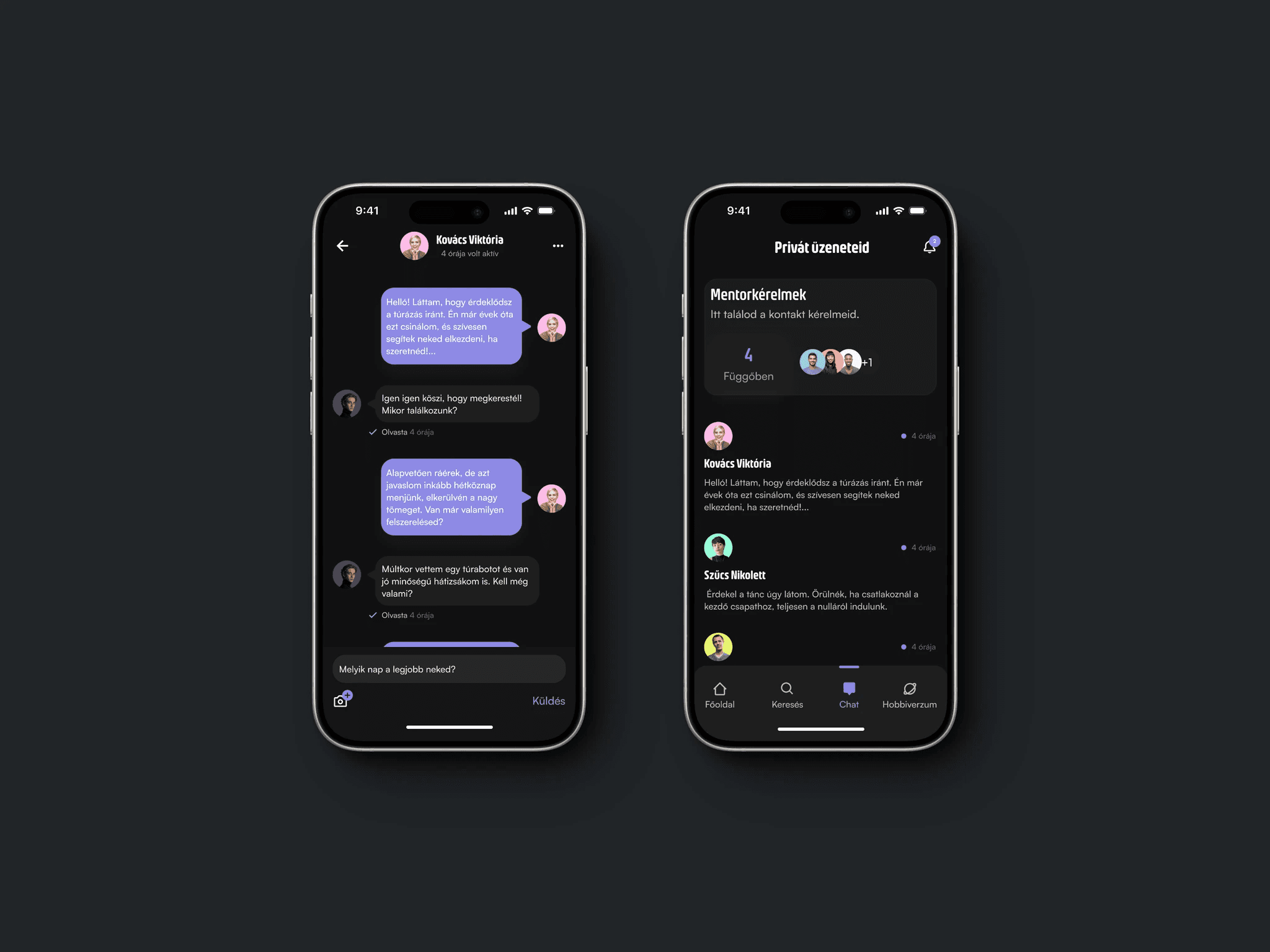
3. Mentorship Marketplace
I introduced a value exchange model:
Mentors define what they want in return (money, barter, etc.)
This is clearly visible on profiles
3. Mentorship Marketplace
I introduced a value exchange model:
Mentors define what they want in return (money, barter, etc.)
This is clearly visible on profiles
3. Mentorship Marketplace
I introduced a value exchange model:
Mentors define what they want in return (money, barter, etc.)
This is clearly visible on profiles
Learnings
What I Learned
As a personal (exam) project, Hobbyverse allowed me to take full ownership of both product and design decisions. The biggest shift in my thinking was recognizing that trust and clarity are not supporting elements, but core drivers of engagement.
This project reinforced the importance of grounding design decisions in real user behavior, and treating even early-stage concepts as complete product experiences, not just UI solutions.
Learnings
What I Learned
As a personal (exam) project, Hobbyverse allowed me to take full ownership of both product and design decisions. The biggest shift in my thinking was recognizing that trust and clarity are not supporting elements, but core drivers of engagement.
This project reinforced the importance of grounding design decisions in real user behavior, and treating even early-stage concepts as complete product experiences, not just UI solutions.
Learnings
What I Learned
As a personal (exam) project, Hobbyverse allowed me to take full ownership of both product and design decisions. The biggest shift in my thinking was recognizing that trust and clarity are not supporting elements, but core drivers of engagement.
This project reinforced the importance of grounding design decisions in real user behavior, and treating even early-stage concepts as complete product experiences, not just UI solutions.